
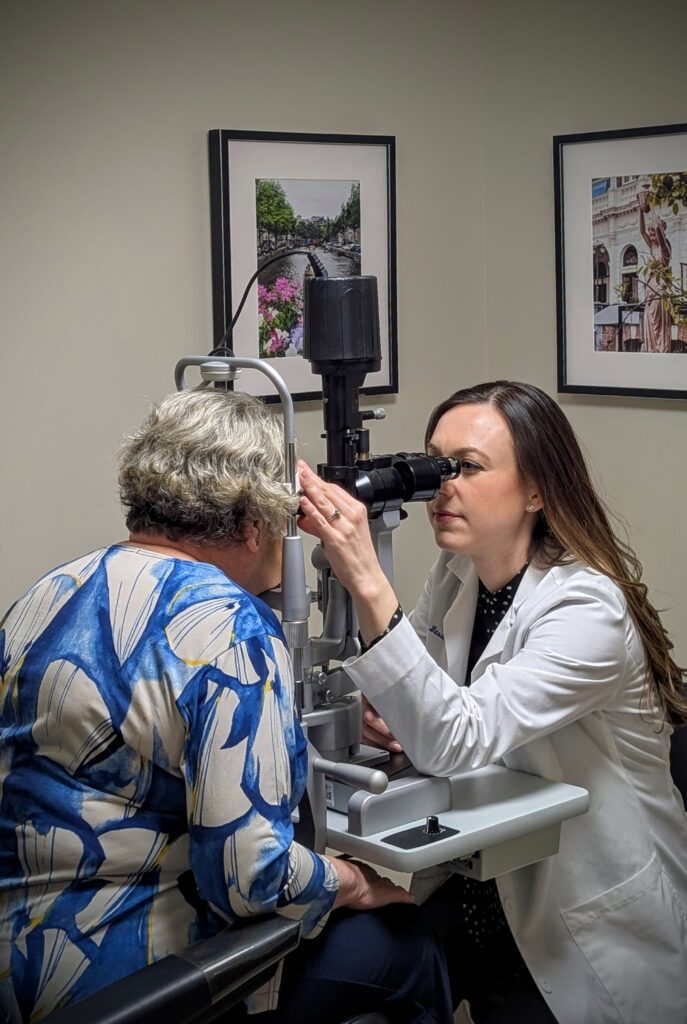
Retina specialists are highly trained physicians and surgeons who specialize in diagnosing and treating diseases and conditions affecting the retina and vitreous, the delicate structures at the back of the eye that are essential for sight.
Their goal is to help patients preserve their vision, prevent vision loss, and, when possible, improve vision so they can continue to see clearly and live independently.
What Does a Retina Specialist Do?
A retina specialist is a medical doctor who has completed specialized training in ophthalmology and then pursued additional subspecialty training in diseases and surgery of the retina and vitreous. This area of medicine is commonly referred to as vitreoretinal medicine and surgery.
The retina is a thin, light-sensitive layer of tissue that lines the back of the eye. It captures images and sends visual information to the brain through the optic nerve. The vitreous is the clear, gel-like substance that fills the center of the eye and helps maintain its shape.
Because the retina and vitreous play such an important role in vision, conditions affecting these structures can be complex and may require highly specialized medical or surgical care.
Conditions Retina Specialists Treat
Retina specialists diagnose and treat a wide range of conditions, including but not limited to:
- Age-related macular degeneration (AMD)
- Diabetic retinopathy and diabetic macular edema
- Retinal tears and retinal detachments
- Retinal vein and artery occlusions
- Epiretinal membranes and macular holes
- Vitreous hemorrhages
- Complications related to eye trauma
- Ocular inflammatory diseases affecting the retina and vitreous
- Complications following cataract or other eye surgery
- Complex retinal conditions requiring vitreoretinal surgery
Treatment may include careful observation and monitoring, medications or injections delivered directly into the eye, laser treatments, or advanced vitreoretinal surgery, depending on the patient’s condition.
How Is a Retina Specialist Different From an Ophthalmologist?
An ophthalmologist is a medical doctor who is trained to provide comprehensive medical and surgical care for the eyes. Some ophthalmologists choose to pursue additional fellowship training in a specific area of ophthalmology, such as the retina, cornea, glaucoma, or pediatric ophthalmology.
A retina specialist is an ophthalmologist who has completed this additional specialized training specifically focused on diseases and surgery of the retina and vitreous. This additional expertise allows retina specialists to provide highly specialized care for conditions that may be difficult to diagnose or treat and to perform complex procedures involving the back of the eye.
How Much Training Does a Retina Specialist Receive?
Becoming a retina specialist requires many years of education and advanced medical training. After completing college, a physician must complete medical school, an internship, an ophthalmology residency, and additional fellowship training in vitreoretinal medicine and surgery.
The typical training pathway includes:
Medical School: 4 Years
Physicians complete four years of medical school to earn their medical degree and develop a broad foundation in medicine.
Internship: 1 Year
Following medical school, physicians complete a one-year internship, gaining additional experience in general medicine and patient care.
Ophthalmology Residency: 3 Years
Physicians then complete a three-year residency dedicated to ophthalmology, receiving comprehensive training in the diagnosis and treatment of eye diseases and performing eye surgery.
Retina Vitreous Fellowship: 1 to 2 Years
After completing ophthalmology residency, physicians pursue additional fellowship training specifically in diseases and surgery of the retina and vitreous. During this intensive subspecialty training, they gain advanced experience diagnosing complex retinal conditions, administering specialized treatments, and performing vitreoretinal surgery.
In total, this represents approximately 9 to 10 years of medical education and specialized training after college.
When Might You Need to See a Retina Specialist?
Your eye doctor may refer you to a retina specialist when you have a condition involving the retina or vitreous that requires specialized evaluation or treatment.
Some retinal conditions can develop gradually without noticeable symptoms, while others can cause sudden changes in vision and require immediate attention.
Specialized Expertise. Focused on Your Vision.
Retina specialists dedicate their careers to caring for some of the most complex and vision-threatening conditions affecting the eye.
Through advanced diagnostic technology, medical treatments, and surgical expertise, they work to protect one of your most valuable senses: your vision.
When you are referred to a retina specialist, you are receiving care from a physician whose additional training and expertise are specifically focused on the health of your retina and vitreous.

